

Cuba — Water Supply Challenges in Havana
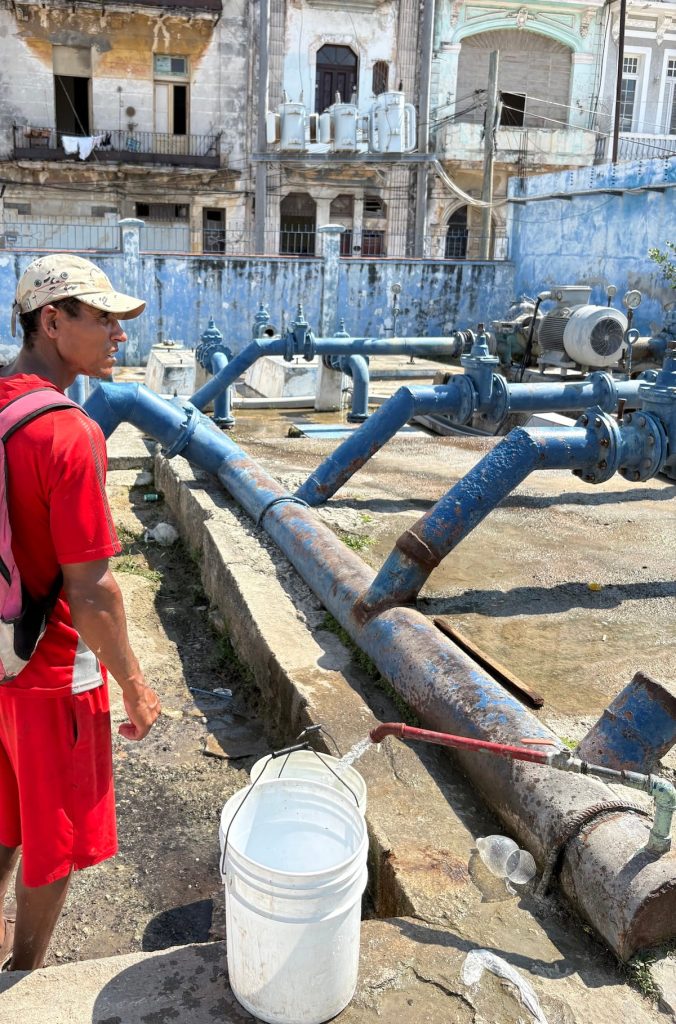
When people talk about the crisis in Cuba, they almost always think of food. Yet water is an equally critical issue—often less visible, but deeply embedded in the daily lives of the people there.
In Havana, access to water depends not only on its availability, but also on its ability to flow.
The system relies heavily on pumping stations, known locally as “bombeo” (estación de bombeo). These facilities are essential because they pump water up into the distribution networks and into homes. But when they stop working—due to power outages or mechanical failures—everything grinds to a halt. And these outages are frequent.
Power outages, which have become a serious problem, cause a drop in water pressure throughout the system. As a result, even if water is available at the source, it no longer reaches people’s homes. In some neighborhoods, entire buildings are left without water for several days.
But there is an even harsher reality. Some homes are simply not connected to the water supply. For these families, the lack of water is not temporary—it is permanent. So, they have to find ways to survive.
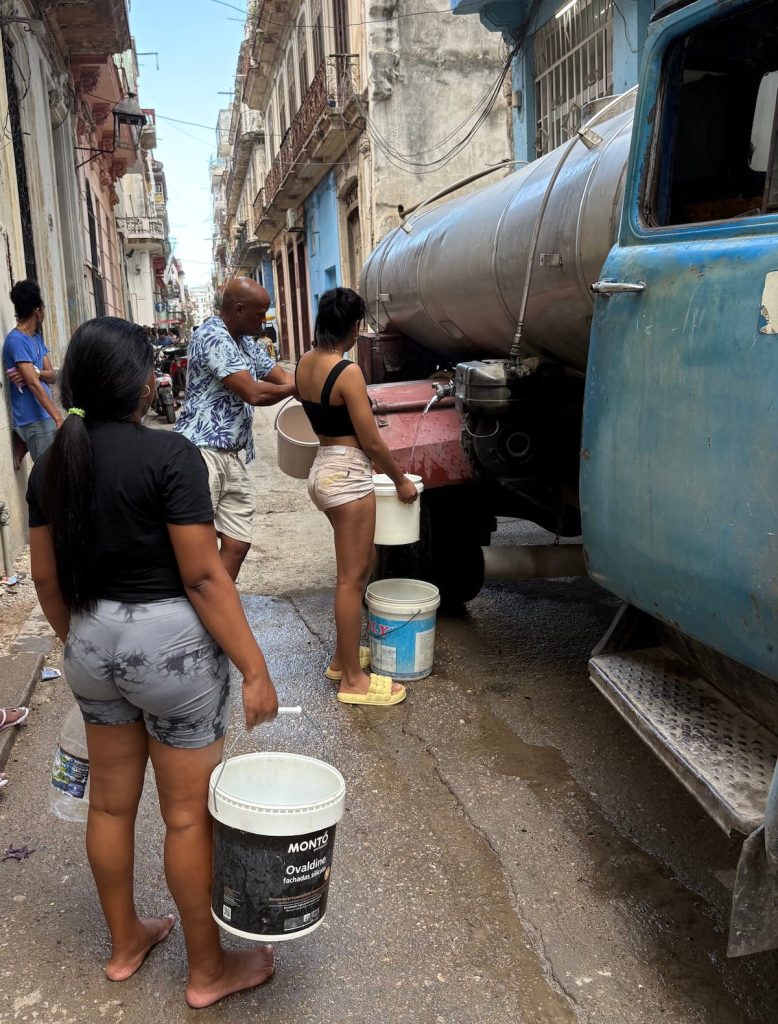
Tank trucks, known as camiones cisterna, come to supply certain areas. But above all, every day, hundreds of people make their way with buckets, jugs, or makeshift containers to fetch water directly from the pumping stations.
Unlike in rural areas, where some families have access to wells or local springs, Havana’s residents are entirely dependent on aging and fragile urban infrastructure. And when that infrastructure fails, there is often no immediate alternative.
This reality turns simple tasks like cooking, washing, or cleaning into real challenges. To understand Cuba today is also to understand this.
Water is not just a resource. For many, it has become a daily struggle.